PalletPro
PalletPro is a desktop-based warehouse packing application designed for fulfillment center operators. Built for packers who stand approximately one meter from their display, every design decision prioritizes visibility, speed, and error prevention.
Fewer scan errors
Faster order completion
Less training time
Operator satisfaction
Problem
Warehouse packers in fulfillment centers face a unique set of challenges that generic WMS interfaces fail to address.
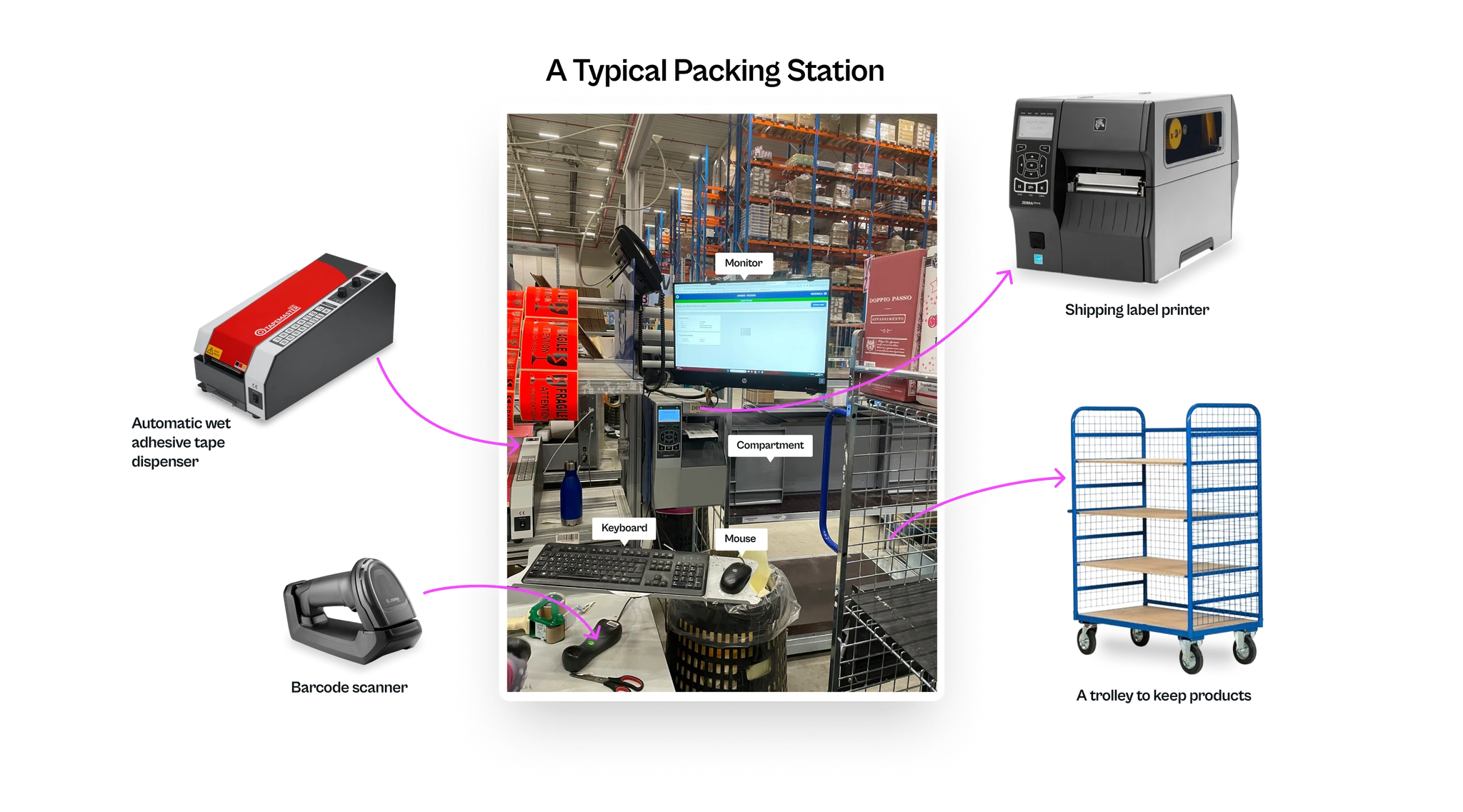
Readability at distance
Packers stand 0.5 to 1.5 meters from their monitors while handling packages. Standard 14px body text is nearly invisible.
Hands-often-full interaction
Packers hold products, tape guns, and scanners. Mouse-heavy interfaces cause constant context-switching and slowdowns.
Error-prone scanning
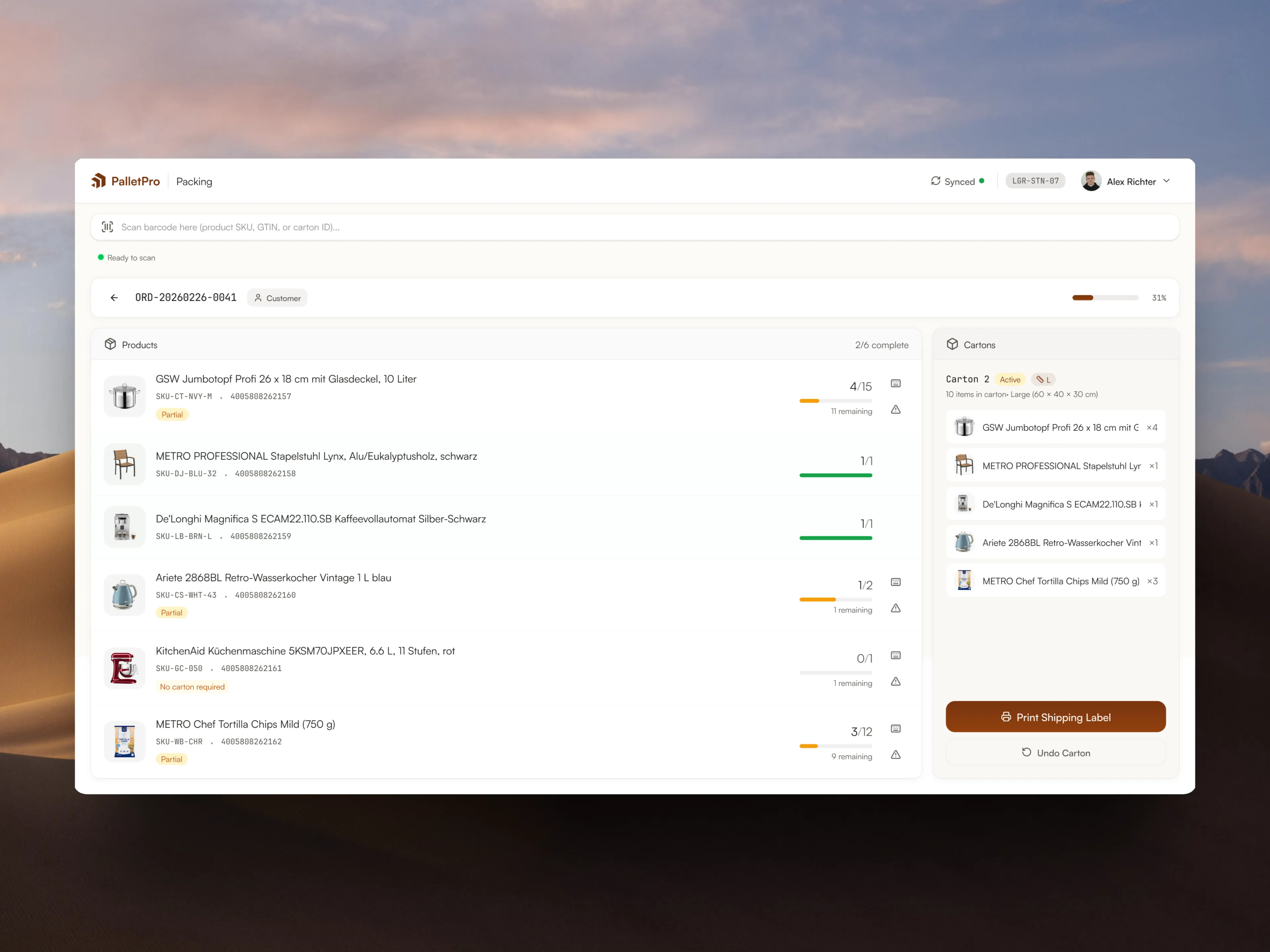
Scanning the wrong barcode, double-scanning, or scanning into the wrong carton are common. Feedback must be immediate and unambiguous.
Solution
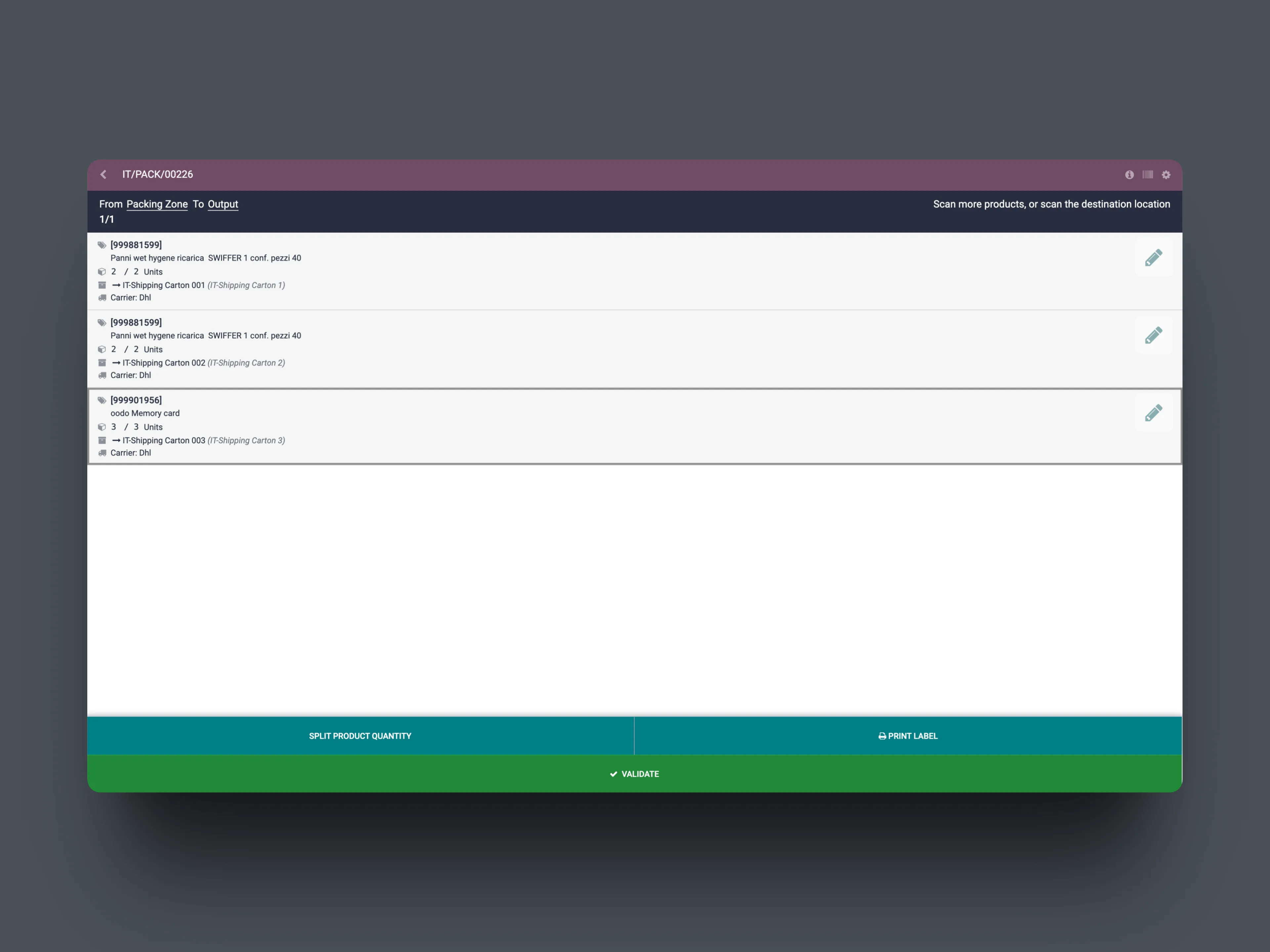
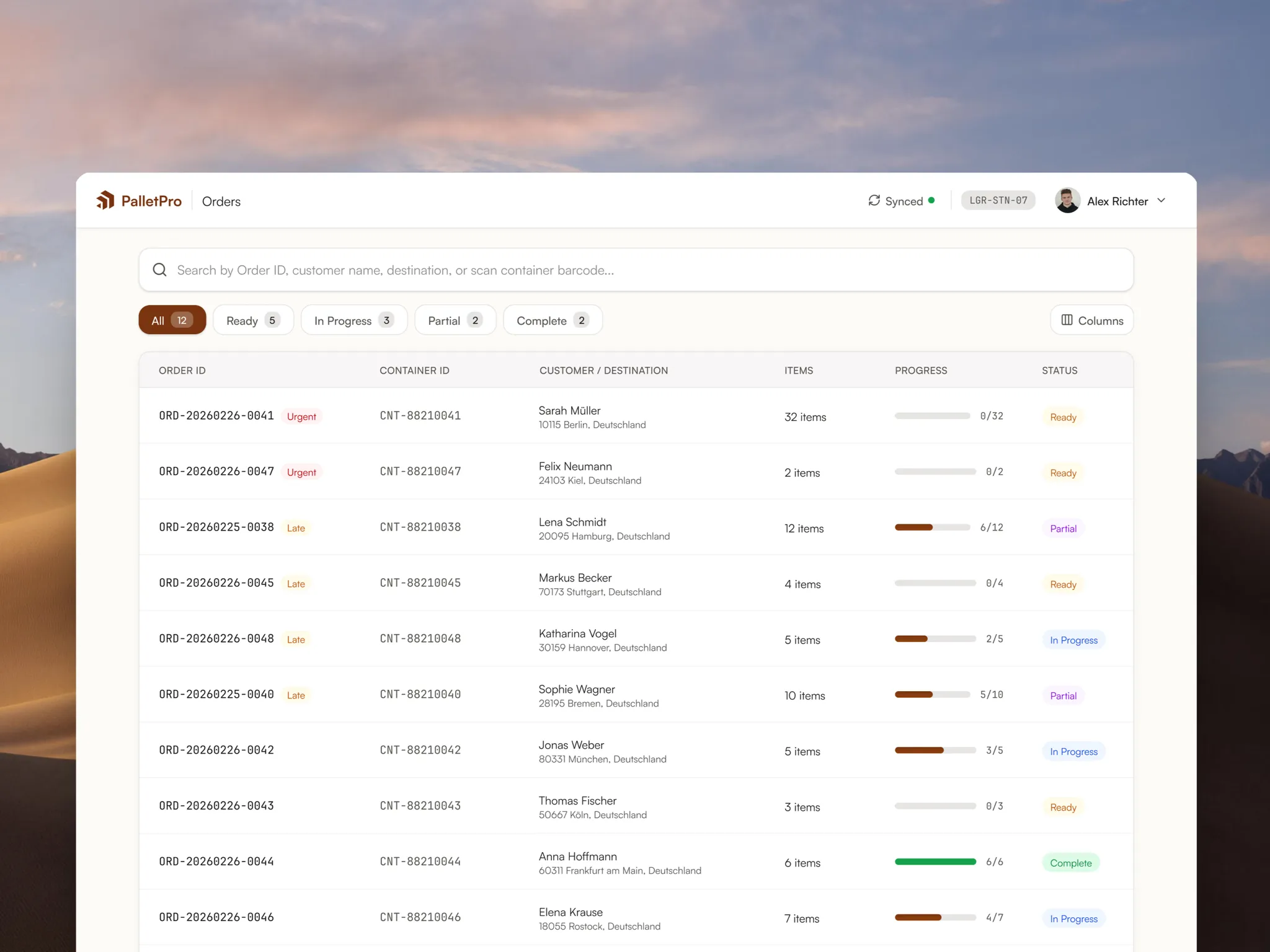
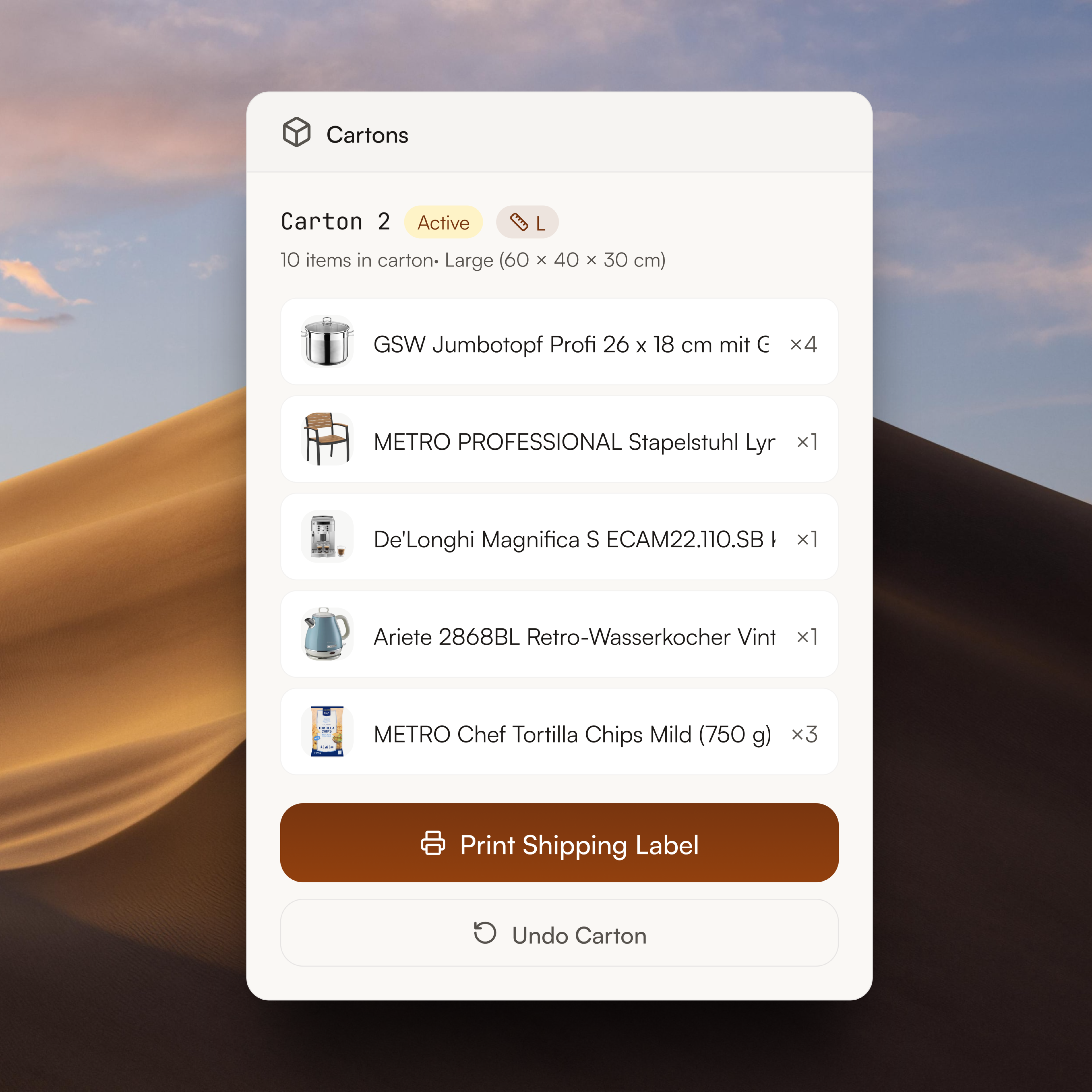
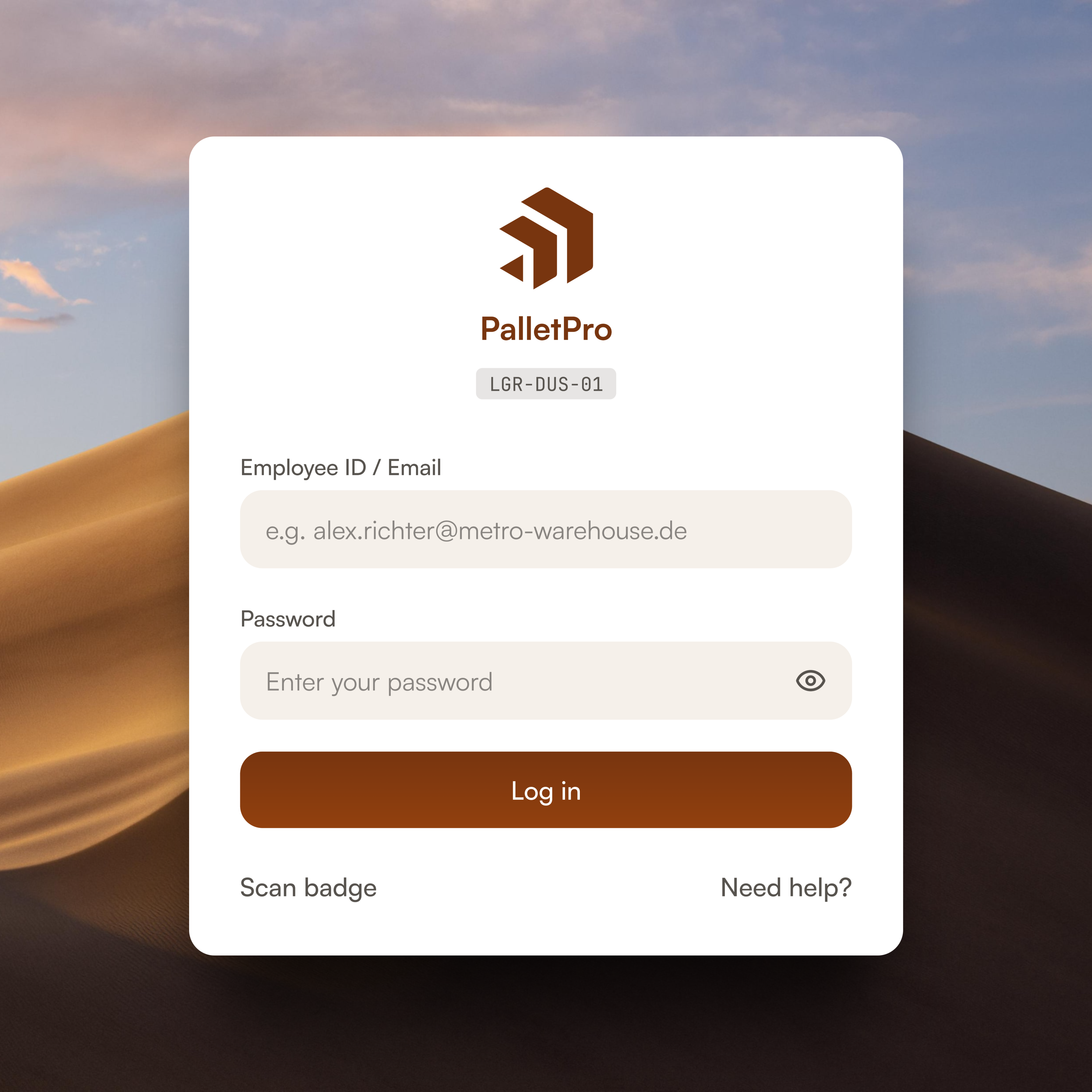
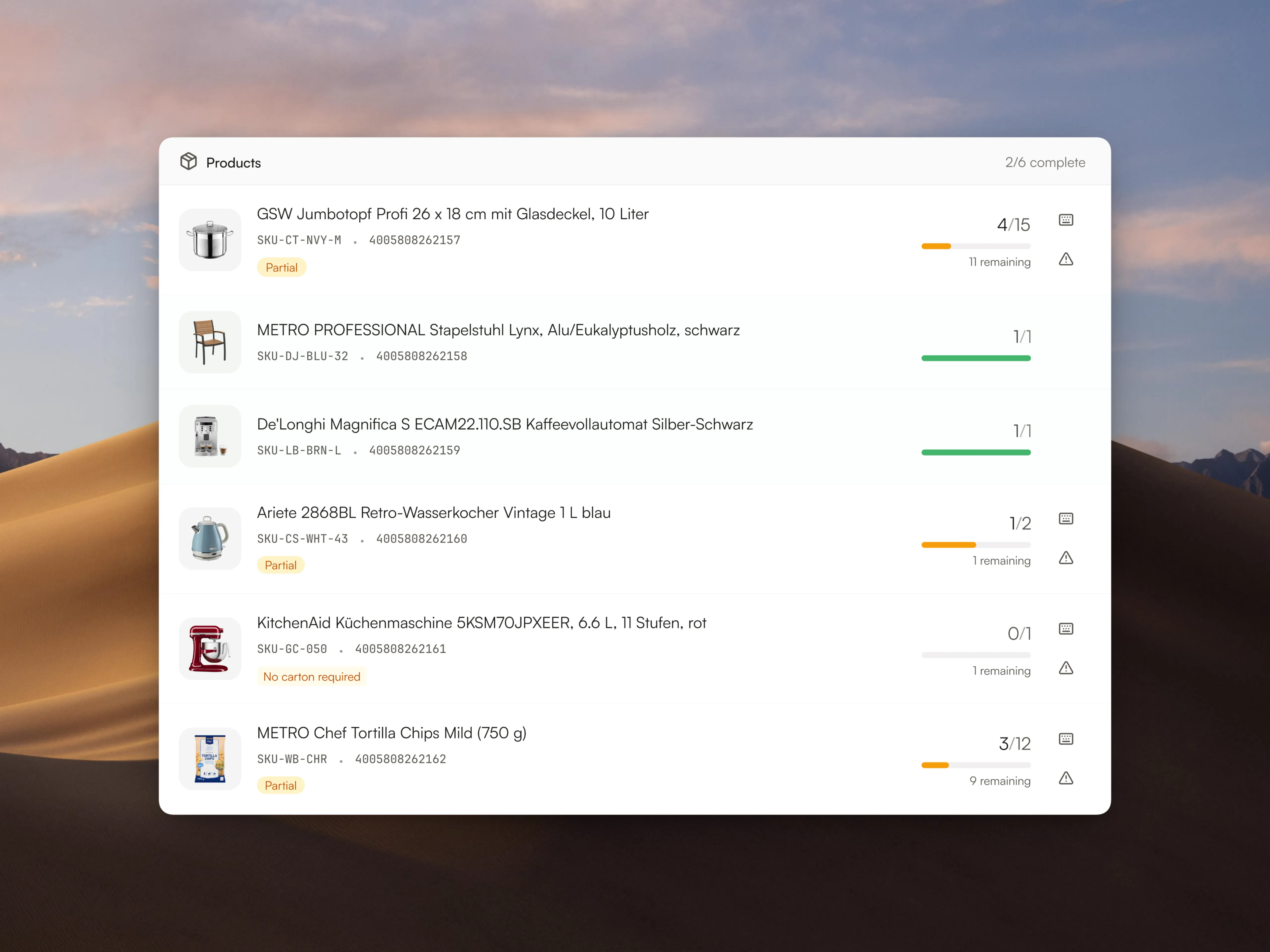
PalletPro reimagines the packing station interface from the ground up. Rather than adapting a traditional warehouse management system (WMS) for standing operators, we designed a purpose-built desktop application that treats the barcode scanner as the primary input device and the screen as a glanceable ambient display.
Results
PalletPro was designed to measurably improve packing speed, accuracy, and operator satisfaction at the warehouses. The following metrics represent improvements based on the design decisions and interaction patterns implemented.
40%
Fewer scan errors
Immediate inline feedback and audio cues prevent repeated incorrect scans.
25%
Faster order completion
Scanner-first design, keyboard shortcuts, and auto-focus reduce time between scans.
60%
Less training time
Linear task flow, progressive disclosure, and in-app help reduce onboarding from days to hours.
90%
Operator satisfaction
Warm color theme, reduced eye strain, sound controls, and a glanceable UI improve the 8-hour shift experience.
Learnings
Design for the body
Understanding physical ergonomics, standing distance, occupied hands, glove usage, changed every sizing and interaction decision.
Sound is a design material
In a noisy warehouse, audio feedback isn't optional polish, it's load-bearing infrastructure. The Web Audio API tones became as critical as visual color coding. Multi-sensory feedback outperformed visual-only in every observation session.
Error prevention beats error messages
The most effective UX improvements weren't better error screens, they were making wrong actions impossible. Auto-rejecting wrong barcodes, blocking over-packing, confirmation flows for destructive actions. The best error message is the one that never appears.